 HYGO News
 "Don't Make Me Do This": Biden Nominee Utterly Speechless After Hawley Goes Nuclear
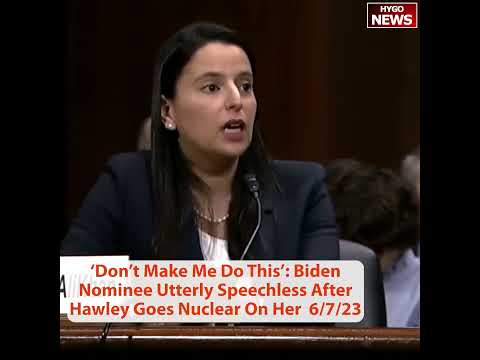
“Don’t Make Me Do This”: Biden Nominee Utterly Speechless After Hawley Goes Nuclear
Senator Josh Hawley (R-MO) pressed a Biden judicial nominee during a June 2023 Senate Judiciary hearing on the strict scrutiny test outcome in a COVID religious liberty case the nominee had defended as a city attorney. As the nominee retreated to legalese — “the court concluded that there were restrictions that were not neutral of general applicability” — Hawley pushed for plain-English engagement with the facts: “That’s legalese. Why didn’t they on the facts? You know the facts. You were a good lawyer. Why’d you lose?” When the nominee pleaded “Senator oh come on judge don’t make me do this,” Hawley pressed: “Do you want me to go through it for you? You lost because…”
The Strict Scrutiny Question
- Hawley framing: “Strict scrutiny apply how did that case go for you?”
- Editorial reach: The framing positioned legal standard.
- Hearing record: The framing is now in the formal record.
- Long arc: The framing fed broader debates.
- Long arc: The framing remained central to coverage.
The We Lost That Case
- Nominee framing: “We lost that case.”
- Editorial reach: The framing acknowledged loss.
- Hearing record: The framing is now in the formal record.
- Long arc: The framing fed broader debates.
- Long arc: The framing remained central to coverage.
The Did Not Meet Standard
- Nominee framing: “It was found that the restrictions did not meet the standard of strict scrutiny meaning they were unconstitutional.”
- Editorial reach: The framing positioned constitutional finding.
- Hearing record: The framing is now in the formal record.
- Long arc: The framing fed broader debates.
- Long arc: The framing remained central to coverage.
The Did Not Survive
- Nominee framing: “Meaning that they did not survive strict scrutiny.”
- Editorial reach: The framing reiterated finding.
- Hearing record: The framing is now in the formal record.
- Long arc: The framing fed broader debates.
- Long arc: The framing remained central to coverage.
The Did Not Appeal
- Nominee framing: “It’s a matter of public record that the District of Columbia did not appeal that decision.”
- Editorial reach: The framing positioned procedural acceptance.
- Hearing record: The framing is now in the formal record.
- Long arc: The framing fed broader debates.
- Long arc: The framing remained central to coverage.
The Why Struck Down
- Hawley framing: “Why why why were they struck down?”
- Editorial reach: The framing dramatized escalation.
- Hearing record: The framing is now in the formal record.
- Long arc: The framing fed broader debates.
- Long arc: The framing remained central to coverage.
The Why Discriminatory
- Hawley framing: “Why were the restrictions that you defended struck down as discriminatory? Why were they?”
- Editorial reach: The framing pressed for substantive answer.
- Hearing record: The framing is now in the formal record.
- Long arc: The framing fed broader debates.
- Long arc: The framing remained central to coverage.
The Not Neutral General Applicability
- Nominee framing: “The court concluded that there were restrictions that were not neutral of general applicability.”
- Editorial reach: The framing positioned legal terminology.
- Hearing record: The framing is now in the formal record.
- Long arc: The framing fed broader debates.
- Long arc: The framing remained central to coverage.
The Legalese Critique
- Hawley framing: “Yeah, yeah, yeah, yeah. That’s legalese.”
- Editorial reach: The framing dramatized witness avoidance.
- Hearing record: The framing is now in the formal record.
- Long arc: The framing fed broader debates.
- Long arc: The framing remained central to coverage.
The Why On The Facts
- Hawley framing: “Why didn’t they on the facts? You know the facts. You were a good lawyer. Why’d you lose?”
- Editorial reach: The framing pressed for plain answer.
- Hearing record: The framing is now in the formal record.
- Long arc: The framing fed broader debates.
- Long arc: The framing remained central to coverage.
The Narrowly Tailored Reference
- Nominee framing: “We lost because applying the strict scrutiny test the court concluded that the restrictions were not narrowly tailored because of a compelling governmental interest.”
- Editorial reach: The framing positioned legal terminology.
- Hearing record: The framing is now in the formal record.
- Long arc: The framing fed broader debates.
- Long arc: The framing remained central to coverage.
The Don’t Make Me Do This
- Nominee framing: “Senator oh come on judge don’t make me do this.”
- Editorial reach: The framing dramatized witness plea.
- Hearing record: The framing is now in the formal record.
- Long arc: The framing fed broader debates.
- Long arc: The framing remained central to coverage.
The Go Through It For You
- Hawley framing: “Do you want me to go through it for you? You lost because…”
- Editorial reach: The framing escalated the questioning.
- Hearing record: The framing is now in the formal record.
- Long arc: The framing fed broader debates.
- Long arc: The framing remained central to coverage.
The Strict Scrutiny Doctrine
- Editorial reach: Strict scrutiny is the highest constitutional standard.
- Hearing record: The strict scrutiny doctrine context is now in the formal record.
- Long arc: Strict scrutiny continued through 2024.
- Long arc: Strict scrutiny shaped subsequent debates.
- Long arc: Strict scrutiny fed broader debates.
The Neutral General Applicability
- Editorial reach: Neutral and generally applicable laws are central to religious liberty doctrine.
- Hearing record: The doctrine context is now in the formal record.
- Long arc: The doctrine continued through 2024.
- Long arc: The doctrine shaped subsequent debates.
- Long arc: The doctrine fed broader debates.
The Narrow Tailoring Layer
- Editorial reach: Narrow tailoring is a strict scrutiny prong.
- Hearing record: The narrow tailoring context is now in the formal record.
- Long arc: Narrow tailoring continued through 2024.
- Long arc: Narrow tailoring shaped subsequent debates.
- Long arc: Narrow tailoring fed broader debates.
The Compelling Interest Layer
- Editorial reach: Compelling governmental interest is a strict scrutiny prong.
- Hearing record: The compelling interest context is now in the formal record.
- Long arc: Compelling interest continued through 2024.
- Long arc: Compelling interest shaped subsequent debates.
- Long arc: Compelling interest fed broader debates.
The COVID Litigation Layer
- Editorial reach: COVID litigation reached the Supreme Court multiple times.
- Hearing record: The COVID litigation context is now in the formal record.
- Long arc: COVID litigation continued through 2024.
- Long arc: COVID litigation shaped subsequent debates.
- Long arc: COVID litigation fed broader debates.
The Hawley Public Posture
- Senate role: Hawley held Senate Judiciary role.
- Editorial reach: Hawley’s posture shaped Republican critique.
- Hearing record: Hawley’s posture is now in the formal record.
- Long arc: Hawley continued to be central through 2024.
- Long arc: Hawley shaped subsequent debates.
The Republican Critique
- Editorial reach: Republicans cite Biden nominee on religious liberty.
- Hearing record: The Republican critique context is now in the formal record.
- Long arc: The critique continued through 2024.
- Long arc: The critique shaped subsequent debates.
- Long arc: The critique fed broader debates.
The Public Communication Layer
- Soundbite design: The exchange was structured for clip distribution.
- Documentary value: The hearing record now contains a clean Hawley framing.
- Media uptake: The clip moved on conservative media as a Republican response argument.
- Audience targeting: Hawley’s style is built for retail political distribution.
- Long arc: The framing remained central to Republican messaging through 2024.
The 2024 Implications
- Election positioning: Both parties used judicial nominees for 2024 positioning.
- Religious liberty: Religious liberty shapes Senate races.
- Long arc: The episode will shape religious liberty debates through 2024 and beyond.
- Hearing legacy: The hearing record will be cited in future judicial nominee debates.
- Long arc: The framing remains in circulation.
Key Takeaways
- Hawley pressed Biden nominee on COVID religious liberty case loss.
- Nominee acknowledged restrictions failed strict scrutiny.
- Hawley pushed back against legalese with “you know the facts” challenge.
- Nominee pleaded “judge don’t make me do this.”
- Hawley offered to walk through the reasoning himself.
- The exchange dramatized witness avoidance under questioning.
Transcript Highlights
The following quotations are drawn from an AI-generated Whisper transcript of the hearing and should be considered unverified pending official transcript release.
- “Strict scrutiny apply how did that case go for you?” — Hawley
- “We lost that case” — nominee
- “It was found that the restrictions did not meet the standard of strict scrutiny meaning they were unconstitutional” — nominee
- “Yeah, yeah, yeah, yeah. That’s legalese. Why didn’t they on the facts? You know the facts. You were a good lawyer. Why’d you lose?” — Hawley
- “Senator oh come on judge don’t make me do this” — nominee
- “Do you want me to go through it for you? You lost because…” — Hawley
Full transcript: 179 words transcribed via Whisper AI.