 HYGO News
 Nick Saban: Nick Saban: system to allow student athletes including women's & olympic to enhance
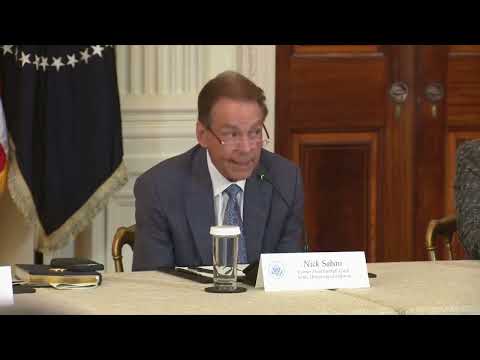
Nick Saban: Nick Saban: system to allow student athletes including women’s & olympic to enhance
Legendary college football coach Nick Saban spoke at Trump’s college sports roundtable, delivering a thoughtful framework for reforming the NIL-era college athletics crisis. Saban emphasized he’s “just a football coach” from Alabama where he won seven national championships over 17 years. His focus: preparing players for success in life beyond football, with 168 degrees earned during his tenure. Saban identified the core problem: players now make decisions about “how much money could they make” rather than “creating value for their future.” Saban outlined needed reforms: effective revenue sharing, authentic NIL (where players actually have marketing value versus collectives creating pay-for-play), eligibility rules preventing 25-26 year olds playing against 18-19 year olds, and transfer rule reform (4,000+ players currently in portal). Saban noted the system requires Congressional action — likely antitrust legislation. Saban’s critical concern: student-athletes in all sports (including women’s and Olympic) need quality-of-life enhancement without losing focus on education. “Nobody talks about” education anymore, despite being most important for students. Saban: “What happened, you know in this current system that we have that became impossible to do because people instead of making decisions about creating value for their future they were making decisions about how much money could they make at whichever school they could go to.” On transfer portal: “We have over 4,000 people in the portal fans don’t like it, support groups don’t like it. It’s not really healthy.” On education: “Nobody talks about it at all which is the most important thing any of these student athletes can do in terms of enhancing their future."
"Just a Football Coach”
Nick Saban opened with characteristic humility. “Thank you, Mr. President, for the chance and the opportunity to be here to speak with you today. But I just want everybody to know that I’m just a football coach.”
Saban framework:
- Grateful for presidential invitation
- Positions as football coach, not policy expert
- Humble despite extraordinary achievements
Nick Saban’s actual record:
- 7 national championships (6 at Alabama, 1 at LSU)
- 205-27 record at Alabama over 17 seasons
- Multiple Coach of the Year awards
- Widely considered greatest college football coach ever
“I spent my life when they when we had the ball trying to get a first down when they had the ball trying to get off the field on third down. So this is an unlikely position for me to be in to speak to such a distinguished group of people.”
Saban’s football description: simple — move chains forward, defense gets stops. The complexity of modern college sports regulation is outside his traditional expertise.
Guiding Principles Question
“Thank you, but I come here today with a question. What are the guiding principles for the future of college athletics all athletics?”
Saban’s framework: before solving specific problems, establish principles. What should college athletics be?
“I’m talking about football basketball Olympic sports revenue non revenue. It doesn’t matter.”
The scope is comprehensive:
- Football (major revenue sport)
- Basketball (major revenue sport)
- Olympic sports (Track, swimming, etc.)
- Revenue sports (football, men’s basketball, some women’s)
- Non-revenue sports (many others)
All sports affected by NIL rules. Most sports don’t generate revenue that justifies large NIL deals, but current chaos affects all.
Saban’s Goal as Coach
“You know my goal as a coach for my players for our players was to help them be more successful in life that we would create an atmosphere and environment that would help them through personal development academic support 168 degrees and 17 years at Alabama and help them develop careers of football player.”
Saban’s coaching framework:
- Success in LIFE (not just football)
- Personal development
- Academic support
- 168 degrees earned during his tenure (impressive academic outcome)
- Football career development
“That was our goal so that they were creating value in life and we were preparing them for their future past athletics.”
The framework:
- Create life value
- Prepare for post-athletics
- Career beyond football
- Education as foundation
This is traditional student-athlete model. Athletic participation develops character, education provides economic foundation, former players become contributing citizens.
”Current System”
“So what happened, you know in this current system that we have that became impossible to do because people instead of making decisions about creating value for their future they were making decisions about how much money could they make at whichever school they could go to or transfer to.”
The post-NIL framework:
- Players making decisions based on current money
- Not future value
- Not education
- Not career preparation
- Just immediate financial gain
The change is fundamental. Previously:
- Players chose schools for education, coaching, program fit, location
- Transfer was rare and costly (sit out a year)
- Money was indirect (scholarship, eventual NFL)
Now:
- Players chase highest bidder
- Transfer is routine (4,000+ in portal)
- Money is direct and immediate
- Educational commitment compromised
“So I think we have a challenge here today about the ramifications of this current system on how it helps players be successful in their future.”
Saban frames the question: does current system actually help players?
“And how would oh and how we can impact and create a system that will help and preserve the opportunity for student athletes to be able to have success in their future beyond athletics.”
The goal: preserve future success opportunity while allowing appropriate compensation.
Proposed Reforms
“So we need to develop an effective system of revenue sharing.”
Revenue sharing: schools share revenue (TV, tickets, merchandise) with players. Mechanism allowing compensation without collectives.
“Authentic name image of likeness authentic being you have marketing value.”
Authentic NIL: based on actual market value. A star quarterback with national TV appearances has real marketing value. Random bench player doesn’t.
“Which now we have Collectives which just create opportunities which just become pay-for-play.”
Current reality: NIL “collectives” operate as:
- Pooled donor money
- Distributed to players
- Essentially pay-for-play
- Not actual market value
“Eligibility issues where we have guys playing six seven and eight years.”
Extended eligibility:
- Standard: 4 years
- COVID waiver: +1 year
- Injury waiver: +1 year
- Mental health waiver: +1 year
- Redshirt year: separate
Combined: 6-8 year college careers possible.
“So you have 25 and 26 year old people playing against 18 and 19 year olds, which is not healthy.”
The competitive imbalance:
- 25-year-old with extensive experience
- Playing against 18-year-old freshmen
- Physical maturity differential
- Skill/experience gap
Not healthy for young players facing much older opponents.
Transfer Portal
“Transfer rules we have over 4,000 people in the portal fans don’t like it support groups don’t like it.”
4,000+ players in transfer portal at any given time:
- Massive roster churn
- Team continuity destroyed
- Recruiting essentially continuous
- Fans lose connection to players
- Coaches can’t build culture
“It’s not really healthy for players in graduation to transfer several times in your career.”
The educational problem:
- Credits don’t fully transfer
- Curriculum differs between schools
- Delayed graduation
- Potentially no graduation at all
“You really put yourself in a pickle in terms of your ability to graduate.”
The risk: players prioritizing short-term money, losing long-term education benefit.
Federal Intervention
“So I think we need to come up with the system and we obviously have to do it with the president’s leadership and also with Congress probably.”
Saban’s framework:
- Presidential leadership
- Congressional action
- Formal legal framework
“Whether it’s antitrust legislation or whatever it is to allow student athletes in all sports including women’s and Olympic sports to enhance their quality of life while going to college but still provide opportunity to advance themselves beyond their athletic career.”
Specific options:
- Antitrust legislation (NCAA exemption)
- New regulatory framework
- Federal oversight body
- Universal rules
The scope:
- Men’s revenue sports
- Women’s sports
- Olympic sports
- Non-revenue sports
- All student-athletes included
“Which is what the philosophy of college athletics and getting a college education has always been about.”
Saban’s traditional framework: college athletics as education enhancement, not professional sport minor league.
”Nobody Talks About Education”
“And how much does anybody? Talk about getting an education anymore. Nobody talks about it at all.”
Saban’s observation: education has disappeared from college sports conversation.
Current framing:
- NIL deals
- Transfer portal
- Professional development
- Money
Missing:
- Academic success
- Graduation rates
- Career skills
- Life preparation
“Which is the most important thing any of these student athletes can do in terms of enhancing their future.”
Saban’s conclusion: education remains most important for player’s future.
Statistics support Saban:
- Less than 2% of college football players reach NFL
- Average NFL career: 3.3 years
- Most players need education for post-football careers
- Educated players have better life outcomes
Saban’s own record:
- 168 degrees in 17 years
- Consistent academic focus
- Prepared players for life
Significance
Saban’s framework represents traditional sports values meeting modern reality:
-
Traditional values: Education, character development, life preparation
-
Modern chaos: NIL, transfer portal, professionalism
-
Reform need: Bridging traditional values with new reality
-
Federal intervention: Individual states and NCAA inadequate
-
Cross-sport concern: Not just football — all college athletics
Saban’s voice carries unique weight:
- Greatest college football coach ever
- 17 years at Alabama
- 168 degrees earned
- Understands both sides
- Successful in traditional framework
- Observed NIL destruction firsthand
Trump’s roundtable legitimized through Saban’s participation. If Nick Saban says current system is broken, virtually everyone involved agrees.
The reform likely includes:
- Antitrust exemption (enabling NCAA to regulate)
- Standardized NIL rules
- Limited transfer rules
- Eligibility caps
- Revenue sharing structure
- Educational requirements
Implementation requires:
- Congressional legislation
- Possible constitutional challenges
- State cooperation
- NCAA restructuring
- University adaptation
Key Takeaways
- Saban’s opening: “I’m just a football coach. I spent my life when they when we had the ball trying to get a first down when they had the ball trying to get off the field on third down.”
- Saban on coaching philosophy: “My goal as a coach for my players for our players was to help them be more successful in life … 168 degrees and 17 years at Alabama and help them develop careers of football player.”
- Saban on current problem: “People instead of making decisions about creating value for their future they were making decisions about how much money could they make at whichever school they could go to or transfer to.”
- Saban on reforms needed: “Effective system of revenue sharing, authentic name image of likeness … Eligibility issues where we have guys playing six seven and eight years. So you have 25 and 26 year old people playing against 18 and 19 year olds, which is not healthy. Transfer rules we have over 4,000 people in the portal.”
- Saban on education: “How much does anybody talk about getting an education anymore. Nobody talks about it at all which is the most important thing any of these student athletes can do in terms of enhancing their future.”