 HYGO News
 Sen Schumer: BBB cut Medicaid, most help to top; Dems: rig tax for rich; Dem Sen Padilla Fake Cries
Sen Schumer: BBB cut Medicaid, most help to top; Dems: rig tax for rich; Dem Sen Padilla Fake Cries
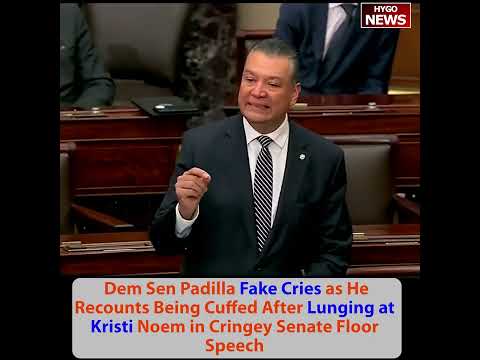
Democratic leaders in the Senate spent the day delivering coordinated messaging against the One Big Beautiful Bill and then capped it off with Senator Alex Padilla’s emotional Senate floor speech recounting his removal from the DHS press conference. Senate Minority Leader Chuck Schumer led the effort, arguing that the bill gives “most of the help to the people at the very top” and attempting to resurrect his border rhetoric with a line about Donald Trump being “the only reason the border is not secure.” Senator Tammy Baldwin added that the bill is designed to “rig the tax code for big corporations.” Senator Ron Wyden called the bill’s provisions “a textbook case of class warfare” and coined the phrase “caviar over kids and Mar-a-Lago over the middle class.” None of these framings survive contact with the bill’s actual provisions — which include a 15% tax cut for Americans earning $30,000-$80,000, elimination of taxes on tips and overtime, and an expanded child tax credit. The day ended with Padilla’s tearful floor speech that did not quite match what the video footage had shown.
The Schumer Border Revival
The day began with Schumer attempting to revive a Biden-era Democratic framing on the border. “Every day between now and November the American people are going to know that the only reason the border is not secure is Donald Trump and his MAGA Republican friends.”
The framing is a near-exact repetition of lines that Biden’s team used in 2024 — before the November election and before the transition of power. The political problem with Schumer deploying the line now is that the empirical landscape has changed. Under the Biden administration, monthly border releases were routinely running in the tens of thousands. In May 2024, approximately 64,000 illegal aliens were released into the country. In May 2025, that number was zero.
The zero figure is the problem with Schumer’s framing. If the border is not secure, it is hard to identify what the border would look like if it were secure. Trump’s enforcement operation has produced what a year ago would have been described as the tightest border of the modern era. Schumer’s argument requires the audience to ignore that change or to dismiss it as somehow not counting.
”Democrats Believe In Lowering Taxes”
Schumer then pivoted to the tax policy framing. “This is the big difference, folks, between Democrats and Republicans. Democrats believe in lowering taxes, but we need to prioritize Americans who are in ultra-rich working families, the middle class, parents raising their kids and small business owners trying to grow. The Republicans, meanwhile, believe in giving most of the help to the people at the very top.”
The transcription “ultra-rich working families” is almost certainly a Whisper artifact — Schumer likely said something like “not ultra-rich, working families.” The substantive claim is that Democrats favor middle-class tax cuts while Republicans favor tax cuts at the top.
The problem with the claim is what the One Big Beautiful Bill actually contains. The bill provides a 15% tax cut for Americans earning between $30,000 and $80,000. It eliminates federal taxes on tip income. It eliminates federal taxes on overtime pay. It provides an expanded child tax credit. It creates Trump Accounts that seed $1,000 investment accounts for every American child.
Each of those provisions benefits middle-class and working-class Americans specifically. The top-end provisions in the bill are largely the extensions of existing tax cuts from 2017 — provisions that prevent the scheduled tax increase that would otherwise hit taxpayers at every bracket level.
”Cut Medicaid For People Who Need It”
Schumer then made the Medicaid charge. “Look, the bottom line is that the Republicans are trying to cut Medicaid for people who need it.”
The administration’s response is that the bill does not cut Medicaid for people who need it. It reforms who is eligible for Medicaid. Specifically, it strengthens work requirements for able-bodied adults, tightens eligibility for noncitizens, and redirects savings toward Medicaid’s core beneficiary populations — children, pregnant women, seniors, and the disabled.
The distinction matters. “Cut Medicaid for people who need it” is the Democratic framing. “Reform Medicaid to refocus on people who need it” is the Republican framing. The same dollar change in the program appears in both framings with opposite valences.
Wyden: “Caviar Over Kids”
Senator Ron Wyden provided the day’s most quotable line. “This bill that my colleagues are talking about is a textbook case of class warfare. It is, in effect, caviar over kids and Mar-a-Lago over the middle class.”
“Caviar over kids” is political poetry. It is memorable, it is quotable, and it is almost entirely at odds with what the bill actually contains. The bill’s provisions on child tax credits, education savings accounts, and Trump Accounts are specifically designed to support children. The bill’s provisions on tips, overtime, and middle-income tax cuts are specifically designed to support the middle class.
Wyden is, in effect, arguing that what looks like support for children and the middle class is actually something else. The argument requires voters to trust the senator’s framing over the bill’s black-letter provisions. That is a heavy lift when the provisions are easily accessible and widely reported.
”Rig The Tax Code For Big Corporations”
Wyden continued. “Even worse, it is also in service of finding every dollar that they can to pay for their scheme to rig the tax code for big corporations and their wealthy friends.”
The charge that the bill “rigs the tax code for big corporations” rests primarily on the bill’s full-expensing provisions for manufacturing investment and its corporate rate retention. Full expensing allows businesses to deduct the full cost of capital investments in the year of the investment, rather than spreading the deduction over years. The corporate rate retention prevents the 2017 reduction from the 35% to 21% corporate rate from reverting.
Whether these are “rigging” or “growth policy” depends on the framing. Economists across the spectrum generally agree that full expensing encourages capital investment, which encourages hiring, which encourages wage growth. The administration’s argument is that the blue-collar wage growth Bessent reported is downstream of exactly these provisions.
Baldwin Adds The Same Line
Senator Tammy Baldwin echoed the framing. “[The bill is designed to] rig the tax code for big corporations.”
The coordinated messaging — Schumer, Wyden, Baldwin all hitting the same themes — indicates careful caucus discipline. Democrats are rowing in the same direction on the messaging. Whether that messaging lands with voters is a separate question.
The Administration’s Countering Record
The administration’s response is factual and specific. The bill provides a 15% tax cut for Americans earning between $30,000 and $80,000. That is a middle-class and working-class tax cut by any definition. It eliminates taxes on tips — a provision that benefits restaurant workers, hotel staff, rideshare drivers, and hairstylists. It eliminates taxes on overtime — a provision that benefits manufacturing workers, healthcare workers, and first responders. It expands the child tax credit. It creates Trump Accounts for every American newborn.
Each provision is targeted at working and middle-class Americans. The cumulative framing of “caviar over kids” requires voters to ignore what the provisions actually do. The administration’s bet is that voters will read the provisions themselves — and that when they do, the Democratic framing will collapse.
”These Aren’t Serious People”
The administration’s compressed judgment of the Democratic messaging was captured in the video: “These aren’t serious people.”
The charge is that a party that calls a bill eliminating taxes on tips, eliminating taxes on overtime, and creating baby investment accounts a “textbook case of class warfare” against kids and the middle class is not engaging seriously with the policy debate. It is running political theater.
The Mamdani Reminder
The video also returned to New York City mayoral candidate Zohran Mamdani. “This is the same Zohran Mamdani who said he would defund the police by $1 billion. Lefty NYC mayoral candidate Zohran Mamdani wants law enforcement protection for himself but not for New Yorkers.”
The reminder is operational. Mamdani’s 2020-era statement supporting defunding the NYPD by $1 billion is a matter of public record. His subsequent request for police protection as a candidate is, in the administration’s framing, the kind of cognitive dissonance that defines the progressive left’s relationship with law enforcement.
The Defunding Statement
The primary-source evidence is in the transcript. “I am in favor of defunding the police. And elaborating. Yes. What that means is that right now in New York City, we have a budget of close to $6 billion for the New York City Police Department. That is an astronomical figure. And I think that what we need to do is not chip away a million dollars or five million. I think in this first year, we need to take a billion dollars out of that budget. And I think that we need to reinvest that money into social services.”
The quotation is unambiguous. Mamdani, on the record, advocated taking a billion dollars out of the NYPD budget in the first year of a term. The administration’s pointing to this statement is the pre-buttal against his current campaign positioning.
Padilla’s Floor Speech
The video closed with Senator Alex Padilla’s emotional floor speech. “I was forced to the ground. First on my knees. And then flat on my chest. And as I was handcuffed and marched down a hallway, repeatedly asking, why am I being detained? Not once did they tell me why.”
The delivery is tearful. Whether the tears are, as the administration’s framing suggests, “fake cries” for political effect is a judgment call. Critics argue that a sitting senator emotionally recounting a physical confrontation with federal agents is a legitimate exercise of his platform. The administration’s framing is that the tears serve a specific political purpose — to frame Padilla as a victim rather than as the instigator of the confrontation.
”Not Once Did They Tell Me Why”
Padilla’s specific complaint — “Not once did they tell me why” — is worth examination. Protective officers who physically restrain an individual typically explain the reason once the individual is secured, not during the physical encounter. The “why” is answered later. Padilla’s framing requires the audience to believe that officers engaged in a physical encounter are obligated to explain their reasoning in real time — an expectation that would make their protective role operationally impossible.
”A Lot Of Questions Came To My Mind”
Padilla continued. “I pray you never have a moment like this. But I will tell you, in that moment, a lot of questions came to my mind. First of all, where are they taking me? Because I know I’m not just being escorted out of the building. Am I being arrested here? And what will a city already on edge from being militarized think when they see their United States Senator being handcuffed just for trying to ask a question?”
The framing treats the handcuffing as a consequence of “trying to ask a question.” The footage showed something different — a senator approaching a cabinet secretary’s podium, failing to identify himself in advance, speaking Spanish that protective officers did not immediately parse, and refusing to follow officer directions to back away.
The DHS statement underlying the administration’s framing was direct. “Senator Padilla was repeatedly told to back away and did not comply with officers’ commands. The Secret Service thought Padilla was an attacker. Padilla was not wearing his Senate security pin and he did not immediately identify himself.”
Those facts, which Padilla’s speech does not address, are the facts that determine whether the protective response was appropriate or excessive. The floor speech is the political response. The facts are the operational reality.
Key Takeaways
- Schumer’s border attack: “the only reason the border is not secure is Donald Trump” — while May 2025 border releases stood at zero, versus 64,000 in May 2024.
- Schumer on BBB: Democrats want the middle class, Republicans want “the people at the very top” — while the bill provides a 15% tax cut for Americans earning $30K-$80K and eliminates taxes on tips and overtime.
- Wyden: “a textbook case of class warfare…caviar over kids and Mar-a-Lago over the middle class” — framing that contradicts the bill’s actual provisions for child tax credits, Trump Accounts, and working-class tax cuts.
- Mamdani on the record: “I think in this first year, we need to take a billion dollars out of that budget” — while simultaneously requesting police protection for his campaign.
- Padilla’s floor speech: “Not once did they tell me why” — omitting DHS’s account that he “was repeatedly told to back away and did not comply with officers’ commands.”